
The Infinite Field: Ikebana & Poetry by Rebecca Pinwei Tseng
This essay was given as a talk at the Queens Botanical Garden on June 6, 2026, as part of the Queens Poetry Symposium, hosted by Tiffany Troy, Katarina La Poll, and Marie La Viña.
As we are in a botanical garden, I thought we could talk about flowers.
Now, some of you may have heard of ikebana, which is a Japanese way of floral arrangement. One translation for the word ikebana is the “way of flowers.”
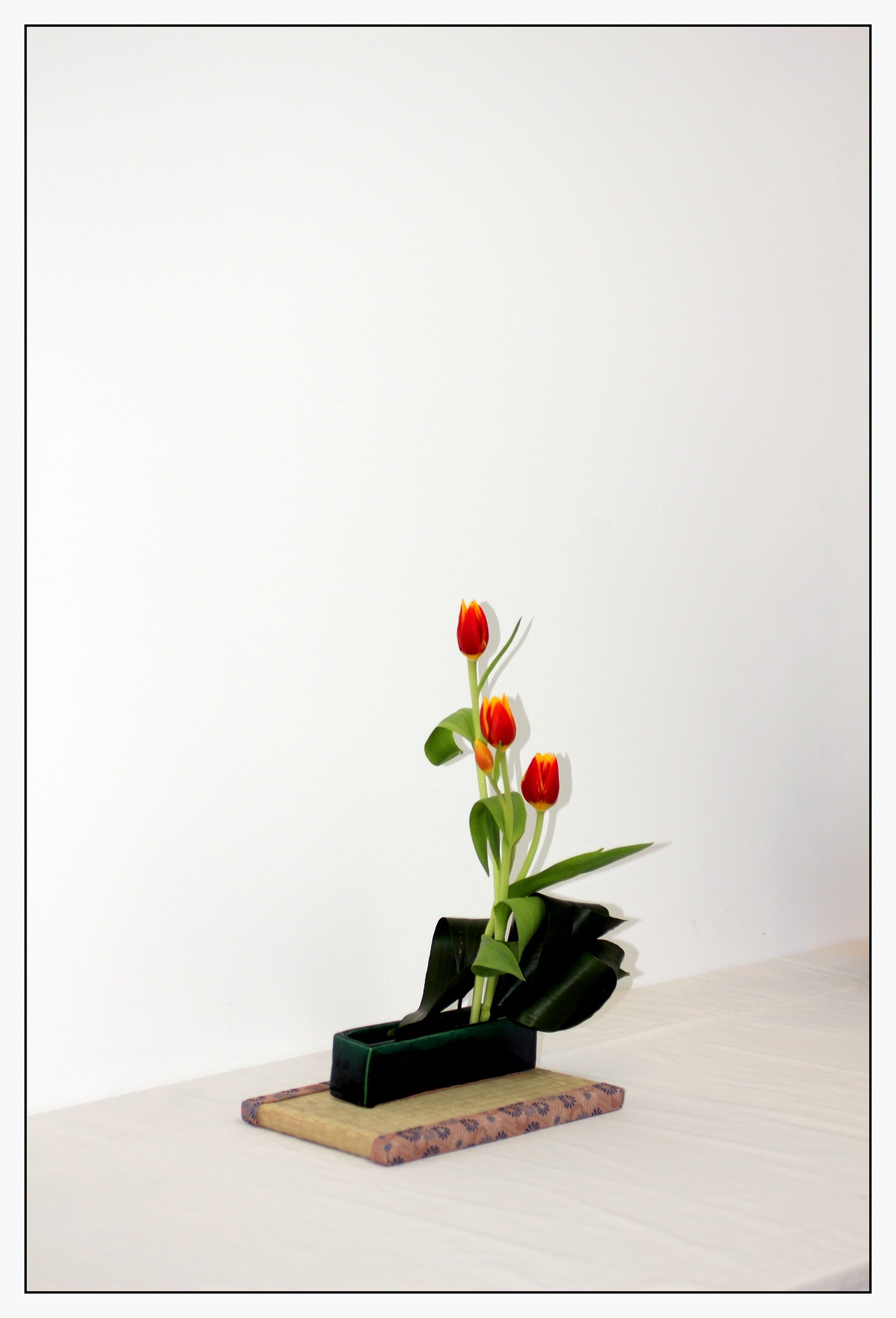
“ikebana” by Martín Vicente, M., licensed under CC BY 2.0.
To be clear, I am not a professional expert in ikebana. I do not have any formal training, only my own research and study. Someday, I do hope to study formally. In the meantime, I practice floral arrangement, finding ways to correspond with the “way of flowers,” similar to how I find ways to correspond with the “way of poetry.”
Today, I want to draw the philosophies of these two forms together.
But first, I want to read the beginning section of a poem by the poet Cate Marvin, titled “Flowers, Always.”

What strikes me in this poem is the recurrence of Always. Always is a hard rock, a clear
and shining path. Always is security, a promise carved into granite, a heart etched into
the trunk of a tree.
Flowers are the opposite of Always. They are transitory—delicate and wilting. They are
changing states into death from the moment they are plucked, sustained by water and
sometimes bleach. Like humans, flowers are born once. This unbroken, continuous
transition to death is a constant reminder of our own human finiteness, our gesture
toward an inevitable end.
Now, there is the idea that to pluck a flower is to waste it, to remove it from its home.
Perhaps this is true, I am not a flower so I do not know how it must feel.
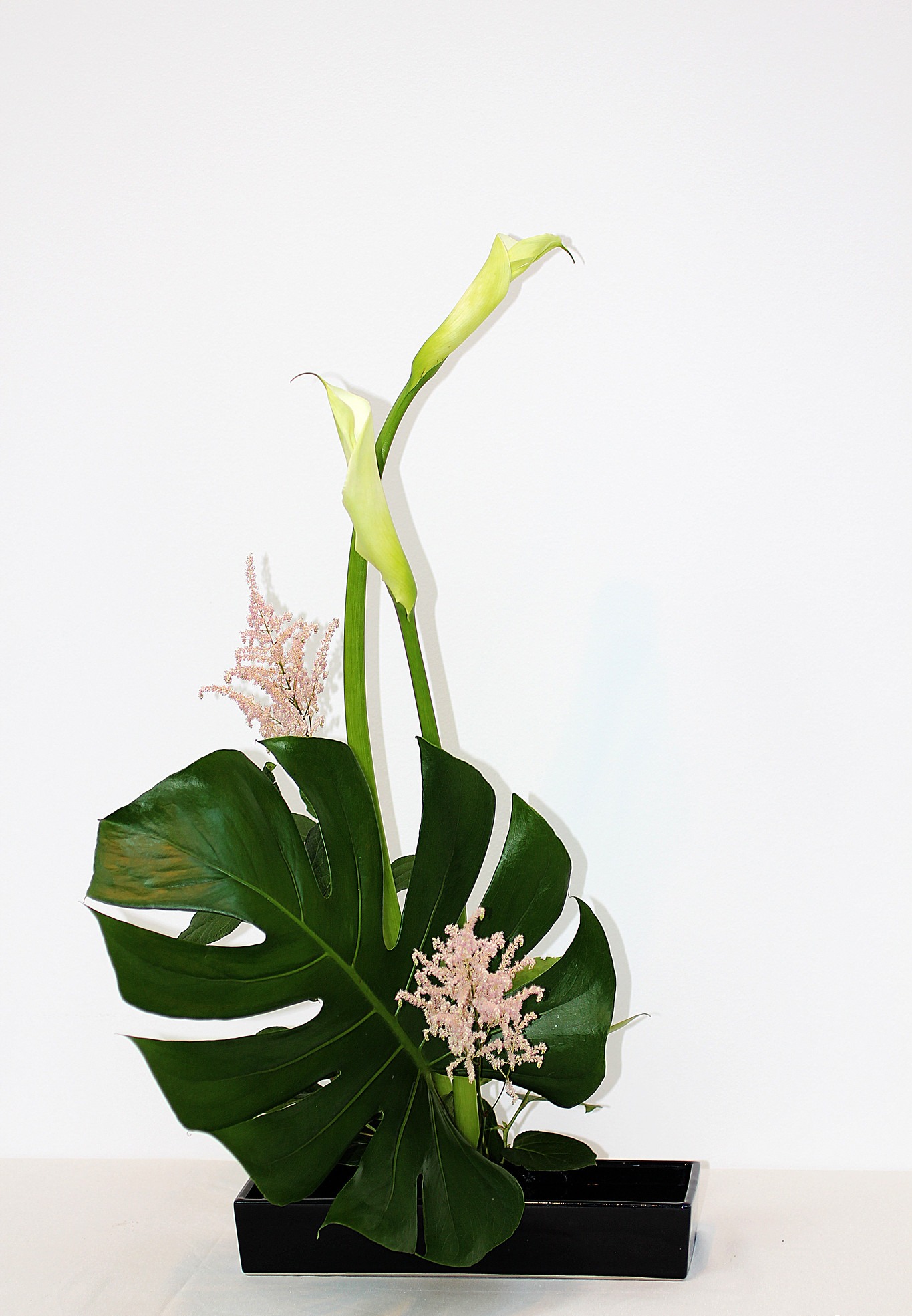
“ikebana” by Martín Vicente, M., licensed under CC BY 2.0. Cropped from original.
But there is a phrase I love: “Flowers become human in ikebana.” This is the notion that the process of arranging flowers is “making the flowers alive.” Of course, flowers are already alive, but now they are alive in the way humans can understand, perhaps selfishly—they are now alive in a human way. A double life for the flowers is created through the act of moving them around in the vase, of noticing.
Last year, my partner’s mother started taking flower arrangement classes with an ikebana master in Taiwan and has been sending photographs of her creations. In one pre-arrangement photo, flowers and leaves of different species are spread out like a fan, as if an infinite field of wildflowers had sprouted from her marble dining table.
In the next photo, she has drawn out the differences. A pale vase holds several pink spray chrysanthemums arranged upwards, tilting left. Eucalyptus leaves sit in a low and feathered huddle at the opposite corner of the vase. In unison, the pink petals extended their reach away from the darkened greens.
In me, I felt a feeling of desire emerge, a sense of their collective longing. I felt it in the flowers, which is to say: I felt it within myself.
The practice of ikebana emphasizes a thread of embracing an inherent and natural flow. Even the shape of the mouth of the vase is a landscape. There is a striving for a natural sense of harmony like how a tree grows in the wild: imperfect yet balanced; balanced, but it’s a balance born from asymmetry. The arranger notices which flowers are naturally drawn toward each other through their special particularities.
During the process of poem-making, there is a similar delight in discovering which words are drawn together through their special particularities.
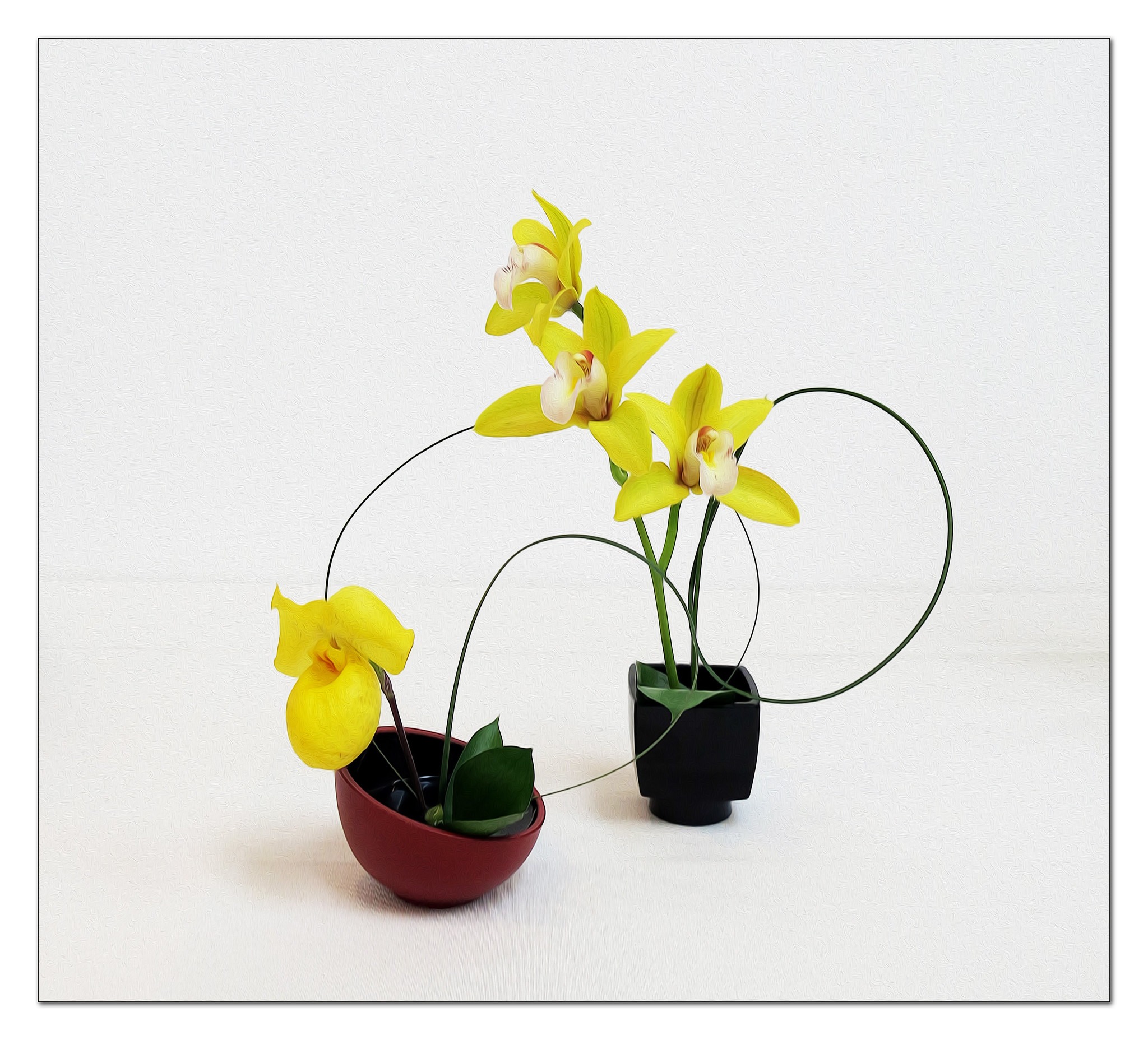
“Ikebana” by Martín Vicente, M., licensed under CC BY 2.0.
In the poet Mary Ruefle’s essay writing: “On Secrets,” she quotes the artist Cecilia Vicuña for “Words have a love for each other, a desire that culminates in poetry.”
Ruefle exclaims in response: “Words love each other!”
Just like a flower in a vase desires another flower, words are drawn together in a poem through their desire to be near other words.
Words on the page are flat and two-dimensional, until a reader picks it up and notices it. This act of noticing creates a conversation with the past—past language, a past poet—a hole in time that is a four-dimensional effect.
The act of noticing points to something—an elusive feeling, a pink or green notion, or a scratch of a concept on the brain. How does the material make us feel? Our work then is to notice the material, then let the material guide us. Whether flowers or language, we correspond with the natural desires of the mediums we work with.
The resulting poem is a finite arrangement of words, culminating from infinite possibilities.
After the devastating earthquake and tsunami in Japan in 2011, the ikebana artist Toshiro Kawase began a project titled, “One Day, One Flower.” In the earth’s memory of the earthquake, he noticed flowers and grass sprouting. For 366 days, he published a new photograph of an Ikebana arrangement on his website every day. Kawase said: “The whole universe is contained within a single flower.”

Cover of Kawase Toshiro: One Day One Flower (川瀬敏郎 一日一花) by Toshiro Kawase. © Shinchosha.
When people came to know about this, they sent him flowers, some even risking their lives to travel to the mountains to deliver him flowers. “One Day, One Flower” became a memory for Kawase’s country, for those living and dead, for the every day.
When arranging, ikebana draws the noticing to the empty spaces around the flowers, as what is not there is just as important as what is there.
But how can we see the whole universe contained in a single work of art, such as a floral arrangement, or a poem—and at the same time, see all that is missing and empty around it?
How can something be absolutely complete while surrounded by all that is not there, at the same time?
Perhaps that is the balance. The necessity of creation as an act of noticing, of witnessing before the inevitability of destruction.
So then: The finite becomes infinite; the infinite makes its meaning from the finite. All to reach toward some essence of truth.
In the last lines of “Flower, Always,” Cate Marvin ends the poem with: “so that when we / die, roses might petal / themselves out our throats.”
We make, and we make meaning, and in doing so, we perhaps make ourselves, like the flowers, more “alive.”
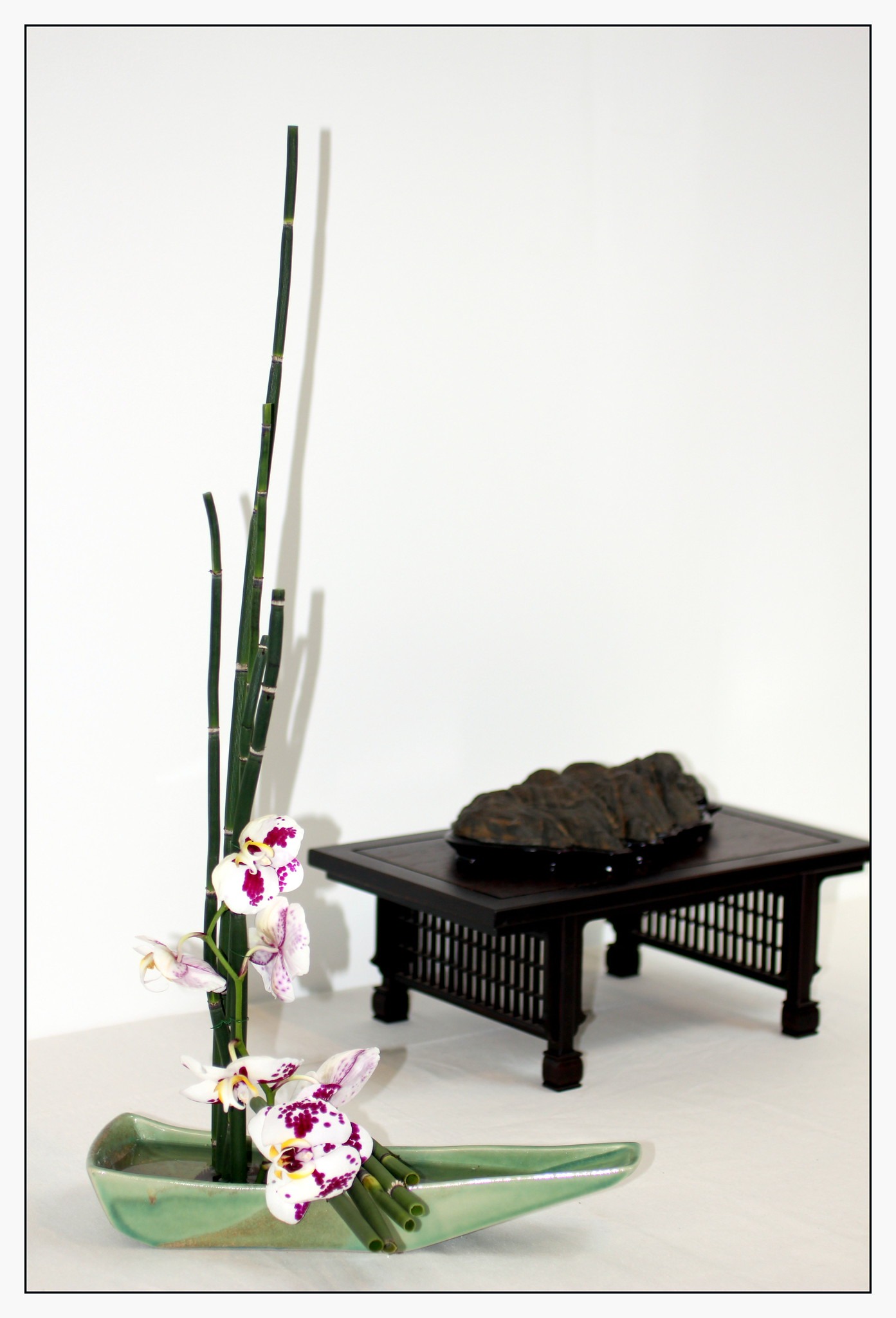
“ikebana” by Martín Vicente, M., licensed under CC BY 2.0.
Now, as we’re almost at the end, I want to present a writing exercise you might try. Here’s how it goes.
Close your eyes and imagine a field of wildflowers. The field is infinite and expanding. Visualize the colors in the field, the petals and how they change shape in the breeze. Where are you walking? What do you sense at your feet?
Now, the field is whispering thousands of words. You realize each of the wildflowers is holding a secret to a different word.
In your mind, you bend down and notice one flower.
Slowly, let its secret word come to you. Once you know its word, pluck the word out and thank the flower. Write this word down.
Now, return to the field and slowly, leisurely and with pleasure, repeat this process four times.
When you have five words, open your eyes.
Cut up five pieces of paper and write a different word on each one. Move them around until the right order of the words comes to you. Then compose your poem using this order of five words.
This will be your poem, your arrangement from the infinite field.
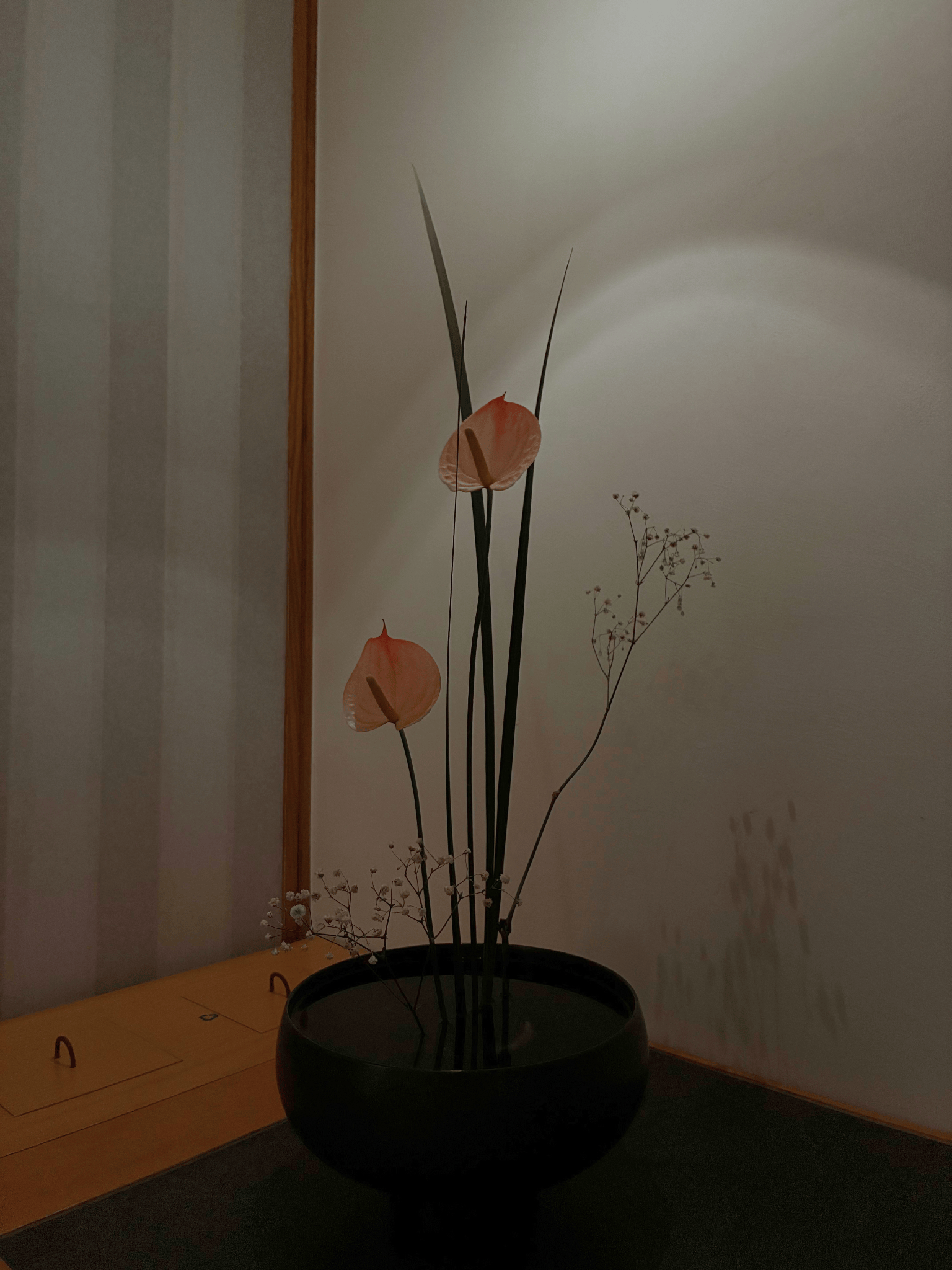
Photo taken by the author in Yilan, Taiwan.
Lastly, I want to end with a poem I wrote while writing this essay, titled “Flower.”
P.S. If you write a poem from the infinite field, please send it my way (rebeccatsengx[at]gmail.com).
Flower
Always is a mountain
Not a flower
No, Always is neither
Poetry that makes forever
The form of time
Earth
Its singular scratch
An infinite field
*
Rebecca Pinwei Tseng is a Taiwanese American poet whose writing has appeared in The Academy of American Poets, AAWW’s The Margins, Tupelo Quarterly, Honey Literary, and others. Her debut collection, I Hope We All Kiss at the End, will be published by Sundress Publications in 2027. www.rebeccatsengx.com