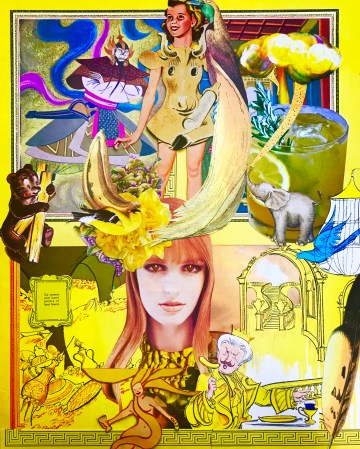
Queen Midas

***

Karyna McGlynn is the author of Hothouse (Sarabande 2017), The 9-Day Queen Gets Lost on Her Way to the Execution (Willow Springs 2016), and I Have to Go Back to 1994 and Kill a Girl (Sarabande 2009).  She is an Assistant Professor of Creative Writing at Christian Brothers University in Memphis.

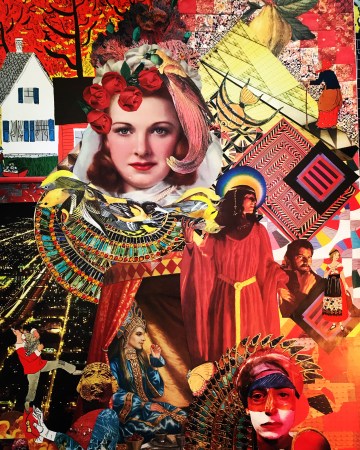
Oracle Queen


***

Karyna McGlynn is the author of Hothouse (Sarabande 2017), The 9-Day Queen Gets Lost on Her Way to the Execution (Willow Springs 2016), and I Have to Go Back to 1994 and Kill a Girl (Sarabande 2009).  She is an Assistant Professor of Creative Writing at Christian Brothers University in Memphis.

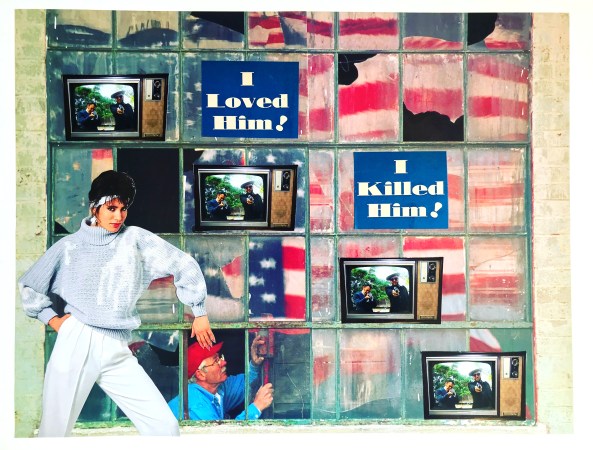
I Loved Him! I Killed Him!

***

New Year’s Day

For Sean Thomas Dougherty


This year there were no parties.  Our friends

Were sick with flu or busy caring

For family sick with flu, but we’d

Still stayed up late talking and drinking

Prosecco, the remains of dinner,

Arroz con pollo, left on our plates.

The next day, we planned to assemble

Ikea furniture, a desk and

Chair.  I confess, the chair is still in

Pieces.  Instead, we cooked black-eyed peas

And cornbread, which made me think of my

Friend Frank who died just a year ago

Because I’d always bring him black-eyed

Peas on New Year’s.  Then, we read poems

From websites or posted on Facebook.

Sean’s poem about the editor

Who sent him a rejection on New

Year’s morning was particularly

Good.  It made me think about the things

We decide should give us hope, this day

Chosen arbitrarily by some

Roman emperor or pope to be

The beginning of—what?—not the end

Of autumn or middle of winter.

Random as the throw of dice on an

Italian afternoon, a man looks

Up from his writing and says, “Yes, I’ll

Begin it here, not at solstice or

Equinox—the sun shall receive no

Primacy.”  In January, the

Sky thickens with clouds thrown like pillows

Across an unmade bed.  Where Sean lives,

Snow’s inevitable, but here in

Florida, winter is the good time,

Nights mild and cloudless, Orion and

The Pleiades visible as soon

As it’s dark, almost as bright as the

Fireworks we watched at midnight, showers

Of red and gold, falling on rooftops

And fences, bell curves of trees, unknown

Yards, and streets where the cars slow to stare.

So, for no reason at all, we cook

A special meal, open the wine we’ve

Been saving, sip espresso sweetened

With Kahlua and turn the pages

Inside of us, mumbling once again

Words we hope will grant wishes, protect

From harm.  A new year begins today.


***

George Franklin’s most recent collection, Traveling for No Good Reason, won the Sheila-Na-Gig Editions competition and was published in 2018. A bilingual collection, Among the Ruins / Entre las ruinas, translated by Ximena Gomez was also published in 2018 by Katakana Editores, and individual poems have appeared in various journals, including Matter, Into the Void, The Threepenny Review, Salamander, Pedestal Magazine, and Cagibi. A broadside from Broadsided Press is forthcoming in 2019, along with new poems in Sheila-Na-Gig.  He also practices law in Miami and teaches poetry workshops in Florida state prisons.

Homily on the Obsolescence of the American One-Cent Piece

You are invited to the traveling exhibit of the thirties,

to eat rotten cabbage, breathe dust. Consider the 19th floor

of the Ritz-Carlton and the elevator operator like a hitman


in gravity’s mafia. Who dare step over a shimmer then?

They dreamed pennies into rain showers in 1936:

Bing Crosby in talkies, then on the radio he lacquered


the thick coats of his croon into a depressed Irish prayer.

There’s the story of four boys in Newark who snipped

a single coin with stolen tin shears to capitalize


upon a chain of grocers’ misprinted flyers—“2 pounds

ground chuck a quarter a penny”—such worth

and ingenuity in smallness, America itself a collection


of bits of fools’ gold. There must always be a soul

picking through the junk shops and county dumps

like the human residue inside the dust, the crying


of the elephant in the ivory keys. The professional piner

aches not for the object but the space

it once occupied. This is why longing so easily turns sacred,


why in the face of the commies Ike signed into law

our communal trust in god, 1956, a new national motto

set above Lincoln as though a divine manual:


“spend and be holy.” One can almost feel the weight

of every piece of specie like the gilded pages

of a book. Strolling down Fifth Avenue, late fall,


an Illinois tourist winces when something sharp

jabs him on the crown and tinkles to the pavement.

The Empire State, the penny, and for all of us he pats his head,


pulls down a streak so red the city dissipates

to a smudgy, grayed-up daguerreotype. Wager it’s been years,

eons since the impulse to taste blood struck you.


But it, too, is a soupçon of copper, it’s a few million palms

seasoned with salt. It’s one river pulsing for better

with what we accept as the smallest unit of hope.


***

Colin Pope grew up in the Adirondacks. His poetry collection, Why I Didn’t Go to Your Funeral, is forthcoming in 2019 from Tolsun Books, and his manuscript Prayer Book for an American God was a finalist for the 2018 Louise Bogan Award and the 2019 St. Lawrence Award. His work has appeared or is forthcoming in SlateRattle, The Cortland Review, The Los Angeles Review, Ninth Letter, and Best New Poets, among others, and he’s the recipient of two Academy of American Poets prizes. Colin is a PhD candidate at Oklahoma State University and serves on the editorial staffs of Cimarron Review and Nimrod International.

Five Poems

*

These crumbs are from so many places

yet after every meal they ripen

sweeten in time for your fingertip


that shudders the way your mouth

was bloodied by kisses wrestling you down

with saliva and rumbling boulders –you sit


at a table and all over again see it

backing away as oceans, mountains

and on this darkness you wet your finger


to silence it though nothing comes to an end

–piece by piece, tiny and naked, they tremble

under your tongue and still sudden lightning.


*

It had an echo –this rock

lost its hold, waits on the ground

as the need for pieces


knows all about what’s left

when the Earth is hollowed out

for the sound a gravestone makes


struck by the days, months

returning as winter :the same chorus

these dead are gathered to hear


be roused from that ancient lament

it sings as far as it can

word for word to find them.


*

Before its first grave this hillside

was already showing signs

let its slope escape as darkness


mistake every embrace for dirt

though one arm more than the other

is always heavier, still circles down


bringing you closer the way rain

knows winter will come with snow

that was here before, bring you weights


till nothing moves, not the shadows

not the sun coming here to learn

about the cold, hear the evenings.


*

Though you can’t tell them apart

your tears came back, marked the ground

the way leaves go unnamed to their death


as the need to follow one another

one breath at a time, face up

and after that the rain and warmer


̶ you weep with your collar open

make room for another grave

near a sea each night wider, further


no longer heard the way now and then

comes by to close the Earth

with buttons and sleeves and tighter.


*

You open this jar the way each raindrop

breaks apart mid-air, stops telling time

when struck by another, head to head


as streams ̶ your hands stay wet

let you gather the hours that are not

the bottom stones mourners use


for water though this lid is still circling

where you listen for those nights

on the way back as the puddles


water makes when trying to breathe

into a place on its own and empty handed

the glass shatters all at once.


***

Simon Perchik is an attorney whose poems have appeared in Partisan Review, Forge, Poetry, Osiris, The New Yorker and elsewhere. His most recent collection is The Osiris Poems published by boxofchalk, 2017. For more information including free e-books and his essay “Magic, Illusion and Other Realities” please visit his website at http://www.simonperchik.com.

To view one of his interviews please follow this link:

https://www.youtube.com/watch?v=MSK774rtfx8


TERMS OF ALLEGIANCE

(poem inspired by work as a “namer” for advertising)


My product needs you. Watch the silver surfaces, the waving waters, wonder why the woman is humiliating the man—hold that anxious thought. We have you now; pledge unconscious

allegiance to us. The words reverberate: aim, aptitude, authority; you are not sure you can measure up. Hold that feeling of self-doubt:  we will bring authenticity, balance, direction, a compass for your life. Now, buy Boson (never mind what it means, it is a solution).

We are anodyne, access to numbness and a world without doubt; we are the antidote.  Buy

Allele (the sound alone is uplifting, lulling). Buy Asana (our sharp penetrating products are as

beneficial as yoga). Watch: we offer you a bright shore, an ascendant future, halcyon nights, a

champion for your battles, a compass in the fog, clarity, concord, electric force.

In your indecisive world, you are on the cusp of a decision: leap! To buy is action, affirmation, connection; the diagram of your life is finally here! We are your doctrine and domain, your

emergent path to an elemental, firsthand, and entire existence.  We are your focus, your formula,

your fulcrum. The world is frightening and ridden with woes; you are daily subject to death by

a thousand cuts. We are your lightship, your sure haven, your journey’s landing, your way through the matrix’s maze, your locus, your hope.

STOP: Your problems, which are legion, cannot be solved outside of the mercantile world. We

control the immaterial and will share its aura if you buy. Without us, you are a zygote, small and unformed, without viability, validity, or worth. We are the membrane through which you must

pass.  Listen: you have problems you have never dreamed of which we alone can resolve. Buy

Synergy, buy Thoughtfulness, buy it all and survive.  Watch the silver surfaces, the waving water, the woman humiliating the man, and buy.


*** 


Larissa Shmailo is a poet, novelist, translator, editor, and critic. Her new novel is Sly Bang; her first novel is Patient Women. Her poetry collections are Medusa’s Country, #specialcharacters , In ParanA Cure for Suicide, and Fib Sequence . Her poetry albums are The No-Net World and Exorcism, for which she won the New Century Best Spoken Word Album award. Shmailo is the original English-language translator of the first Futurist opera Victory over the Sun by Alexei Kruchenych, performed at the Los Angeles County Museum of Art, the Brooklyn Academy of Music, and theaters and universities worldwide. Shmailo also edited the online anthology Twenty-first Century Russian Poetry. Please see more about Larissa at her website  www.larissashmailo.com

The News

for Anthony Bourdain & Kate Spade


I am a stupid and simple soul


for if love can be addressed on the path to Paradise

or shift the sheer being of material things

on the bed stand, in the kitchen, in the garden;


if love can speak of crowns and cowardice,

or cows moaning on the way to slaughter

entrails and organs, brains and offal–


how is it this paradox still stands before me

like the headline of the suicide

of a celebrity chef or a designer


who were clearly loved and left a child

to imagine the world without them;

and if love can lay drunk and moaning


on a hotel bed for the chance to sleep

when the beloved is miles away and the one

so desired is sleep and sleep and sleep,


how can there be no sex can cure this,

no taste bedevil this, no colorful handbags of

promises to bring one back from the brink,


and though I have come back many times,

how could I be one of the lucky ones

neither famous nor infamous


but in comfort nonetheless

as I know whence my next meal will arrive

and my beloved will prepare it


and I will wash the dishes and sweep the floor

and the dark will settle upon

our house as if it were not a call to enter


which I hear whispering still beneath

her voice telling me we are not yet done,

come to bed anyways and sleep my love


***

David Mura’s newest book is A Stranger’s Journey: Race, Identity and Narrative Craft in Writing. He has written four books of poetry, the latest The Last Incantations, and two memoirs, Turning Japanese and Where the Body Meets Memory.

WE DO NOTHING AFTER A MASS SHOOTING IN KALAMAZOO

These grey daisies of sky, these clouds: Mary Lou,

Tyler, Barbara, Richard, Mary Jo, Dorothy.

Let these not only be names I lay down in a poem


on Easter Sunday. So I am one weed among many

dead flowers. I am where it is the hardest to be inside this

almost spring as one daffodil drugs a hummingbird


into kissing, and the ghost of my grandmother barefoot

in her front yard introduces herself to a maple leaf,

then another, reaching each leaf with a ladder so delicate-


orange, and touching each leaf to her cheek, and sticking

a tiny white name tag to each, even though we know

what’s coming, what the coming autumn will do,


how for these monumental deaths each year, we will

never receive justification. Kalamazoo, even now,

in blunt sunshine, a valley of cerulean overhead,


already among the neon joggers, each leaf is

being forgotten into a tree. Be honest with me.

This is how we save ourselves in the city: by turning away.


We are already turning away from silence,

that silence— the blood we are swallowing—

that silence of my father against the maple tree


the day his mother died, a poppy crushed

in his coat pocket, that silence after six people

shot dead in a city I’ve only begun to love.


Wait. That silence we will soon shoulder away

with noise is still right here. The world’s

engine has stalled, and this is a moment.


Let me stay inside it. There is a great cloud

which is standing before me in the center

of this room in the center of any city,


and I have been standing here trying to shout

that thing away (forgive me). Let me reach

for the harder thing, to have two full congregations


of teeth in the cathedral of the throat

and not to use them, yes, this must be my impossible

human challenge, to fill this newest loneliness


with silence, to lie down on my back in the lilacs

with my eyes open, and to live here, and to sing nothing…

but when the whole field falls again, we will wake up one day


and find ourselves responsible for the world. And what will we do

with this gift of having survived? Will we funeral each leaf,

and rub each leaf to our cheek, and then pin each leaf


back on the living tree? Will we re-build the red forest

out of dead poppies? No. We will do nothing. So every leaf

must be a field, then, every flower, an ocean, and the ghost


of my grandmother is a nation of fallen down starlings,

and the camera must be sharpening its focus on us, now,

and we weeds who are left standing, left wagging our heads,


left alive, again, my good green friends, again, out of all

that is tiny but valuable, look at the dead we’ve made.


***


Ephraim Scott Sommers is a poet and singer-songwriter from Atascadero, California. His book of poems, The Night We Set the Dead Kid on Fire (Tebot Bach Press), was awarded the 2016 Patricia Bibby First Book Award. Recent poems, essays, and fiction have appeared or are forthcoming in Beloit Poetry Journal, Minnesota Review, Prairie Schooner, TriQuarterly, and elsewhere. He is currently an Assistant Professor of Creative Writing at Winthrop University in Rock Hill, South Carolina. For music and poems, please visit: http://www.ephraimscottsommers.com/

 

THE WEEPER OF PATASKALA, OHIO (OR ELSEWHERE)

he lets the hot water run and brushes
Friday night teeth before the fogged mirror
that swallows memory backward and down the deep throat
of time: Cierra’s paisley strewn June dress, décolletage
at sixteen stained with the old man’s bilked grape wine.
lips inked purple, wet and shifting beneath the gift
of her mother’s quiet Parisian nostrils. he liked she
didn’t talk much, this silver coin fixed to the pond floor
of mutual reflections. she’s long gone now: hot water runs
and he spits her into the sink drain, and in a popped collar
polo hunts the strobe-lit-dive-bar-dance-floor for
fuller, more spirited noses and mouths agape
in unified gospel: please, pick me. he licks a neck
for taste. pinches cocoa-buttered hip fat for validity.
then whispers back, color means nothing.

even on these fresh breath Friday nights filled
with the ones who’ve mastered salivation—
he dreams his childhood ingénue drifts high plains
in cream-colored cowboy boots and ironic Walmart denim
thinking of him. really, she knocks back the daily pill
with shots of Knob Creek—bumps only the purest
up those refined holes—and touches the kind of men only
who swear to god they’ve no recollection of her
fractured summer dresses from an adolescent Ohio.
in his sleep he weeps, wakes wild and torn, thinking,
corn-fed fleeting whore. once the dark ones exit
and he’s calmed by morning coffee and cigarette,
during this light of day what he really means is this:
please, darling, come home so we can drink again
and be together merry beneath the burning sun.


for Fionah


***

AKHIM YUSEFF CABEY teaches writing at Columbus State Community College. A Pushcart Prize winning essayist, his work has appeared in Callaloo, Obsidian II: Black Literature in Review, The Sun, Kweli, Breakwater Review, and elsewhere. He is currently working on full length book of poetry titled Get Funky.