
Category: Uncategorized
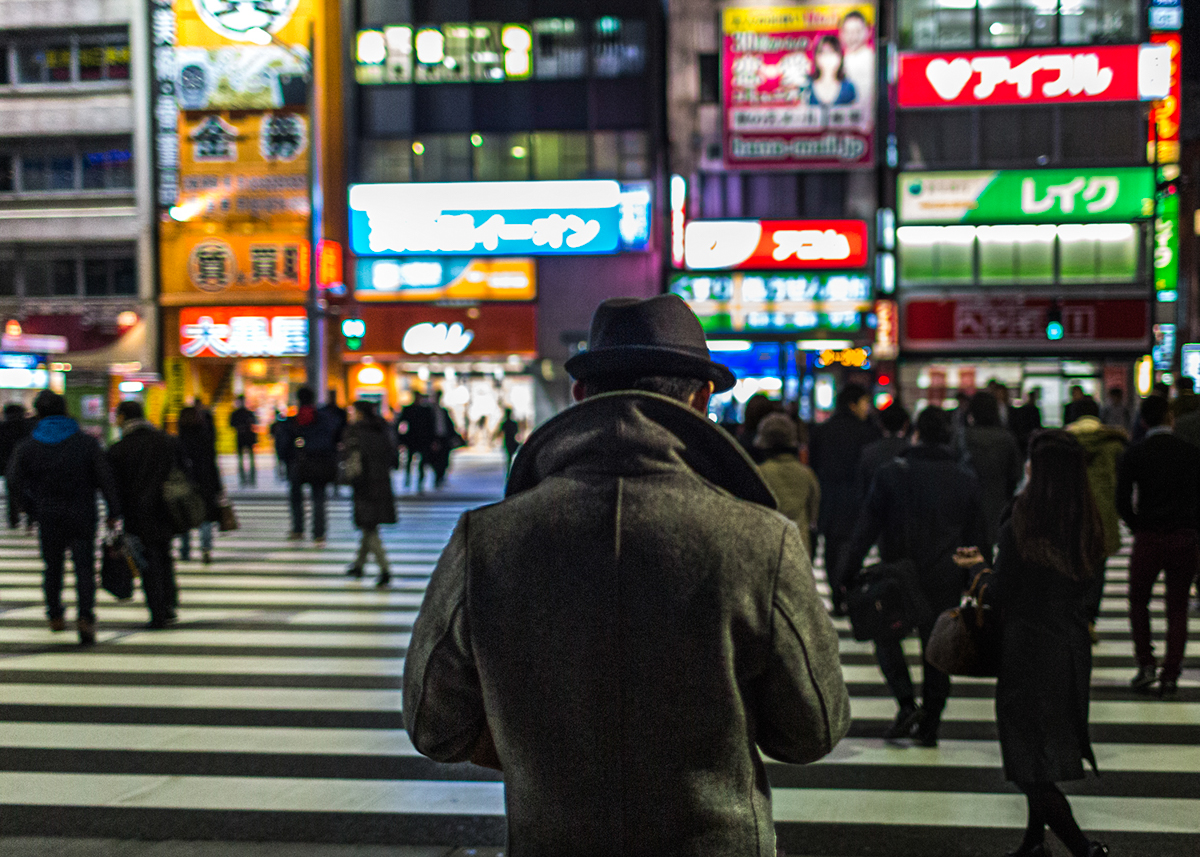
North Station, Tokyo
***
Behind me, North Station tunnels
pour people from track to street,
flooding the crossing
on the pulse of changing lights
Caught in the crowd
I’m swept further into the night
and gasp at the awful, throbbing clamor of too much.
Overwhelmed by incandescence
and the surge of passing bodies
I seek a sign I can transcend.
Ahead, a man in a fedora
stops to check his phone.
My father wore a fedora-fifty years ago
and half a world away.
It is enough.
***
Robin Boger’s images from Cuba, Africa and Japan have been shown at the Chandler Gallery in Cambridge, MA, the Orton-Davis Gallery in Hudson, NY, the Amanda Smith Gallery in Johnson City, Texas, South X Southeast Photo Gallery in Molena Georgia and the Griffin Museum of Photography in Winchester, MA. She has also shown work at the Soprafina Gallery in Boston, MA, the Iris B. and Gerald Cantor Gallery at the College of the Holy Cross in Worcester, MA, and the Boston Public Library. On-line presentations include: “The Virtual Curated Shed: Projections from Pandemic in Focus” on the Social Documentary Network; “Unexpected Cuba” in CubaSeen, Issue 03, Winter, 2020; “The 2/22/22 Exhibition: Pairs and Diptychs” on Lenscratch and “Highlights of NEPR” on “What Will You Remember?”
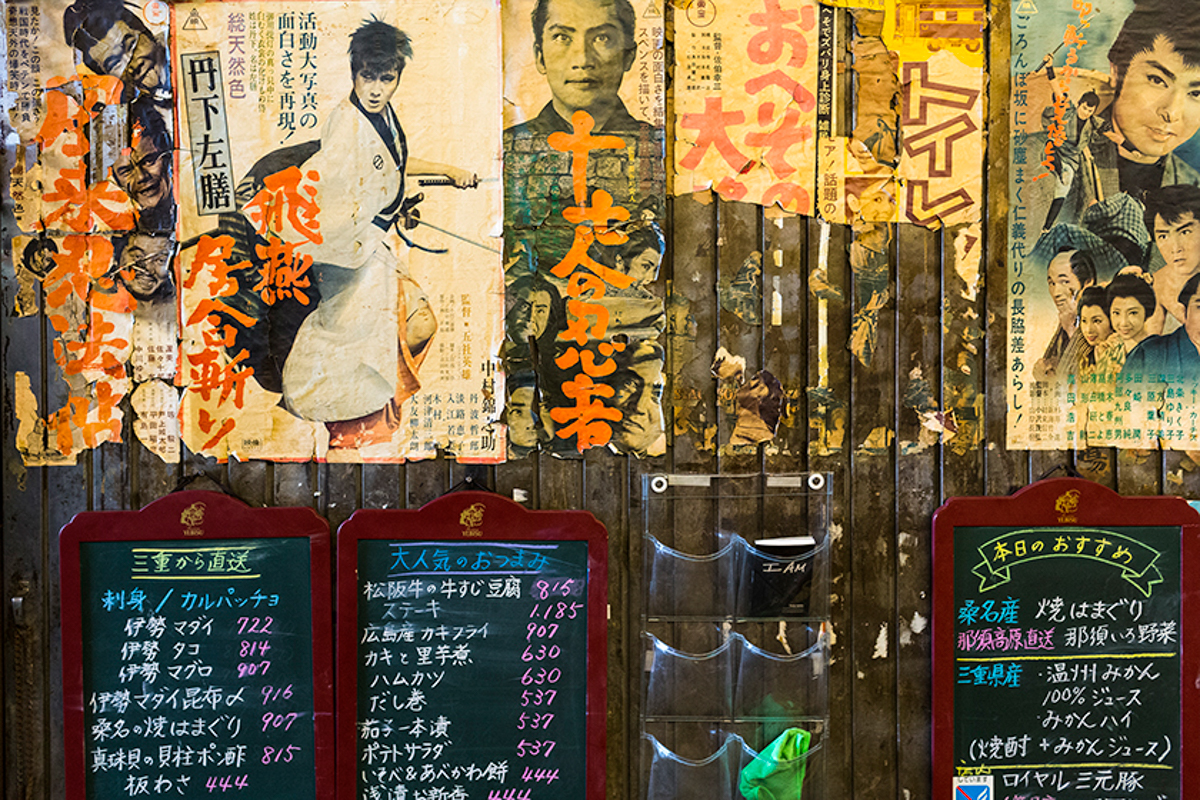
Underpass, Tokyo
***
I do not want to linger here.
The space is dark, cavernous, unwelcoming.
The air chills and cars rumbling above disturb.
Walking quickly, I come upon a wall.
Seized by its color and energy I stop,
held fast by scraps of celebrity long-past.
There, amid the faces that promise excitement
and the foods that promise enjoyment,
a small, black book offered in plastic
—I AM—
promises eternal life.
***
Robin Boger’s images from Cuba, Africa and Japan have been shown at the Chandler Gallery in Cambridge, MA, the Orton-Davis Gallery in Hudson, NY, the Amanda Smith Gallery in Johnson City, Texas, South X Southeast Photo Gallery in Molena Georgia and the Griffin Museum of Photography in Winchester, MA. She has also shown work at the Soprafina Gallery in Boston, MA, the Iris B. and Gerald Cantor Gallery at the College of the Holy Cross in Worcester, MA, and the Boston Public Library. On-line presentations include: “The Virtual Curated Shed: Projections from Pandemic in Focus” on the Social Documentary Network; “Unexpected Cuba” in CubaSeen, Issue 03, Winter, 2020; “The 2/22/22 Exhibition: Pairs and Diptychs” on Lenscratch and “Highlights of NEPR” on “What Will You Remember?”
Witness, Atlas Mountains

***
She opened her house to us for a price
but that price has not been paid.
From the back of the room we watch, unseen
witness to her anger, hostage to our shame.
***
Robin Boger’s images from Cuba, Africa and Japan have been shown at the Chandler Gallery in Cambridge, MA, the Orton-Davis Gallery in Hudson, NY, the Amanda Smith Gallery in Johnson City, Texas, South X Southeast Photo Gallery in Molena Georgia and the Griffin Museum of Photography in Winchester, MA. She has also shown work at the Soprafina Gallery in Boston, MA, the Iris B. and Gerald Cantor Gallery at the College of the Holy Cross in Worcester, MA, and the Boston Public Library. On-line presentations include: “The Virtual Curated Shed: Projections from Pandemic in Focus” on the Social Documentary Network; “Unexpected Cuba” in CubaSeen, Issue 03, Winter, 2020; “The 2/22/22 Exhibition: Pairs and Diptychs” on Lenscratch and “Highlights of NEPR” on “What Will You Remember?”
Okavango, Delta

***
Leaving the baobab tree behind,
we glide through the grasses,
shivering the gilded surface of the swamp
as the setting sun pulls the mokoros home.
***
Robin Boger’s images from Cuba, Africa and Japan have been shown at the Chandler Gallery in Cambridge, MA, the Orton-Davis Gallery in Hudson, NY, the Amanda Smith Gallery in Johnson City, Texas, South X Southeast Photo Gallery in Molena Georgia and the Griffin Museum of Photography in Winchester, MA. She has also shown work at the Soprafina Gallery in Boston, MA, the Iris B. and Gerald Cantor Gallery at the College of the Holy Cross in Worcester, MA, and the Boston Public Library. On-line presentations include: “The Virtual Curated Shed: Projections from Pandemic in Focus” on the Social Documentary Network; “Unexpected Cuba” in CubaSeen, Issue 03, Winter, 2020; “The 2/22/22 Exhibition: Pairs and Diptychs” on Lenscratch and “Highlights of NEPR” on “What Will You Remember?”
Abuela, Vinales

***
You have lived a life of caring,
sowing comfort and cultivating possibilities
as a plough furrows land, preparing it for seed.
There are seasons given for growth,
but no limit on seasons for love.
***
Robin Boger’s images from Cuba, Africa and Japan have been shown at the Chandler Gallery in Cambridge, MA, the Orton-Davis Gallery in Hudson, NY, the Amanda Smith Gallery in Johnson City, Texas, South X Southeast Photo Gallery in Molena Georgia and the Griffin Museum of Photography in Winchester, MA. She has also shown work at the Soprafina Gallery in Boston, MA, the Iris B. and Gerald Cantor Gallery at the College of the Holy Cross in Worcester, MA, and the Boston Public Library. On-line presentations include: “The Virtual Curated Shed: Projections from Pandemic in Focus” on the Social Documentary Network; “Unexpected Cuba” in CubaSeen, Issue 03, Winter, 2020; “The 2/22/22 Exhibition: Pairs and Diptychs” on Lenscratch and “Highlights of NEPR” on “What Will You Remember?”
The sun has just come up, 34 weeks
so I’m in bed reading a news article
about problems with the supply chain —
why Americans have to suffer
inconvenient waits for gaming
consoles, Cheerios and hot tub parts.
Something about shipping
containers and coronavirus.
No end in sight.
I might deliver this baby in a birthing center.
Not because of supply issues but because hospitals
cost so much: because even though it’s not in the headlines
what’s considered good health insurance still asks
Americans to pay thousands of dollars for the privilege
of having a child under supervision of medical care.
At the birth center, they don’t offer anesthetics.
Very un-American. My mother balks.
This isn’t about being a hero.
I agree, but with anger.
My acupuncturist friend asks if I take
medication for headaches. We’re trying to determine
my tolerance for pain.
I tell her I don’t get headaches but prefer to feel
my period cramps when they’re bad.
The internet says I should plunge my hand
into a bucket of ice water and see how long I can last
without taking it out.
This sounds like a torture
I don’t need to make mine.
In the mail, black bands arrive:
strips of thick fabric with Velcro to support
my belly, ease what the midwife calls round
ligament pain—pressure on my unsettled
pelvic parts. I still can’t give a great
definition of the cervix.
A person who delivers in a birthing center
should probably know more about the cervix.
The belly band doesn’t help.
A friend asks if I’m reading a ton
about childbirth and I tell her not really,
I’m instead trying to finish Jonathan Franzen’s new novel
not because it’s that good and in spite of feeling some shame
around reading the quasi-cancelled guy but because there’s something
comforting in those broken family stories that are far enough
from mine to provide pleasant diversion.
I don’t want an epidural because I want to feel the baby
transition out of me. I want to numb myself
from only certain kinds of boredom and pain.
***
Elizabeth Tannen is a writer, organizer and educator based in Minneapolis. Her poems and essays have appeared in a range of publications including Copper Nickel, Front Porch, PANK, Southern Humanities Review, the Rumpus, Salon and elsewhere. She holds an MFA in Creative Nonfiction from the University of New Mexico and has been awarded several residencies including from Kimmel Harding Nelson and the Wurlitzer Foundation. Her manuscript, Notes on Distance, was one of five finalists for Milkweed’s Lindquist and Vennum prize in 2018.
Matter’s Edge
For the fish washed up to shore far behind
the trawl lines, scales gone dry & gills stiffened
by coastal winds, not for them rotting but for gulls
arrived too late, shooed away as children
free their piled dreams like sand buckets, this poem
is theirs. Not the maggot hand clinging
behind the skull’s exposed eye socket, or the jelly
displaced by drift into the sun’s aberrant reflection
but to the beach lice the signs once warned of, the swell
that makes the still-intact tail appear to move
breath back to sea, not the crested waves’
break full of discarded shell but its weight,
the time it spends empty, to which I give
this ode. To all that is hollow or hollows fill
arriving the color of tide matching the low cloud
that brims this cavity, empty except where a storm
should be, all the space constituting what worth this is for.
***
A graduate of Colorado State U’s MFA program, Jerrod E. Bohn is the author of three full-length poetry books, Animal Histories (2017), PULP: A Manifesto (2018), and Ventric(L)e (forthcoming 2023) all from Unsolicited Press. His poetry and nonfiction has appeared in numerous literary journals and other publications. Bohn currently lives in Seattle where he is a college professor and part time writer for Bandbox Vinyl Record Club. Additionally, he runs Gravel: A Reading Series at a local brewery and enjoys cooking and being outdoors.
Histories
The ones we loved who drowned
we called uncle. They ate black bread
in their lifetimes but never in ours.
They woke up early, ground their good
legs into brass, educated their children
in one bicycle accident after another.
Moshe had a twitch in his left eye,
the eye that was as blue as the other
stayed brown. He would ask one eye
to sing to the other. Only in bed.
Only when sketching his sheer curtains
blown haywire by the wind. His one
window facing south from Moscow.
***
Jordan Stempleman is the author of eight collections of poetry including Wallop and No, Not
Today (Magic Helicopter Press). He is an editor for The Continental Review and Windfall Room, serves as
the faculty editor for Sprung Formal, and runs A Common Sense Reading Series.
They Call it a Bargain
The future
has no money
but it does have
our ideas
about where the money
should go.
Try flipping off the light
right after falling
asleep in that chair.
Do you feel less
cramped
or like your tongue
has swollen
around your little
sudden heart?
What would you pay
to stay in the dark
to say
to that heart
pay anything
when you’re told
cough up
the cash for feeling
this remarkably
still
still enough
to be picked up
or put down?
***
Jordan Stempleman is the author of eight collections of poetry including Wallop and No, Not Today (Magic Helicopter Press). He is an editor for The Continental Review and Windfall Room, serves as the faculty editor for Sprung Formal, and runs A Common Sense Reading Series.
Serenading the Absolute for a good night’s sleep
1.
praise be to god, to nought, to nay*1
the Ni in nihilo n’ested within Neest*2
praise be the emptiness
the colorless light and the naked vagrant
we whisper into any unknown
name new frontiers
serenade coastlines for blessing
our mecca is roadkill
a coup de grace
praise be the prophecy of death: the interim
a self in a nafas*3
a breath in a naffs*4
breath habbs*5 in lungs
praise be the shackles of the body,
the kept breath
the subdued self
praise be the god of subsets
the force (Jabbr*6)
in Al-Gebra*7
to rule:
ticker-taped ruler
praise be the ego for lighting the path to praise
praise be the prophet, the prophets.
praise be to all the emphatically human
2.
we sank into the floor
caressed by the music
some eat and call it beautiful
when I say my hunger is ancient
its not for poetic effect
a century defined with wars
we’ve sold madness for bullets
but when I say I am hurting
you’re caressed by its resonance with the natural
sink deeper into comfort
it is frequent
a fattening
it is a soothing
frequency
3.
show me the patriot
in your mind palace
its shape and insignia
a beard
or absence of
of course I’m interested
in hearing about the downfall
plaque by plaque
the martyrs relent
give way to shops
in that part of town
4.
IF I CAN’T BE THE CURE
I MIGHT AS WELL BE THE DISEASE
slouching towards a terminal speaker
to touch with words that hunger
and it is in that impulse to share bodily warmth
that we are colonized at the membrane
a banquet to celebrate the fall of capital
another to celebrate the fall of banquets
a body suspended
a body carried
a body bloodied
waters muddied but
no water to drink
what if before speaking
we settled the unspoken
the working
the struggling
the floating
suspended
between life and death
5.
When they say they don’t like big words,
they mean they don’t like poverty
Notes
1. in Farsi: (نی)a Persian wind instrument, a reference to the beginning of Rumi’s Mathnavi, one of the only works produced in the Islamic world that does not begin with the name of Allah
2. in Farsi (نیست) meaning nothingness
3. in Farsi (نفس) meaning breath
4. in Farsi (نفس) meaning the self, a homonym for *3 in Farsi
5. in Farsi (حبس) meaning to restrict, here meaning “to hold the breath”, used for its rhyming potential with Nafs
6. in Farsi and Arabic (جبر) meaning “Force”
7. Algebra, the mathematical discipline takes its name from the Arabic word “Jabbr”
8. referring to Mansur Hallaj, the Sufi Mystic who said “انا الحق” (Ana’l Haqq) or “I am the truth” which his environment took as a proclamation of divinity and therefore became the reason for his execution.
***
Khashayar “Kess” Mohammadi (They/Them) is a queer, Iranian born, Toronto-based Poet, Writer and Translator. They were shortlisted for the 2021 Austin Clarke poetry prize, they are the winner of the 2021 Vallum Poetry Prize and the author of three poetry chapbooks and two translated poetry chapbooks. Their debut poetry collection “Me, You, Then Snow” is out with Gordon Hill Press. Their second book “WJD” is forthcoming in a double volume with the translation of Saeed Tavanaee’s “The OceanDweller” from Gordon Hill Press fall 2022. Their collaborative poetry manuscript with poet Klara Du Plessis is forthcoming with Palimpsest Press Fall 2023.
 Matter